Teams are Complex!
Hard pressed team leaders and their HR/L&D colleagues often roll out a psychometric questionnaire in the belief this will open the door to great conversations and enhanced team performance. They might also arrange for colleagues to have one-to-one coaching.
But nothing really shifts. Why?
Teams are highly complex adaptive systems. Performance is the result of aligning multiple interacting factors, in addition to dynamically managing the many relationships in play. Add shifting operational contexts over time, and interactions with other teams across an organisation, and you have a massive challenge on your hands.
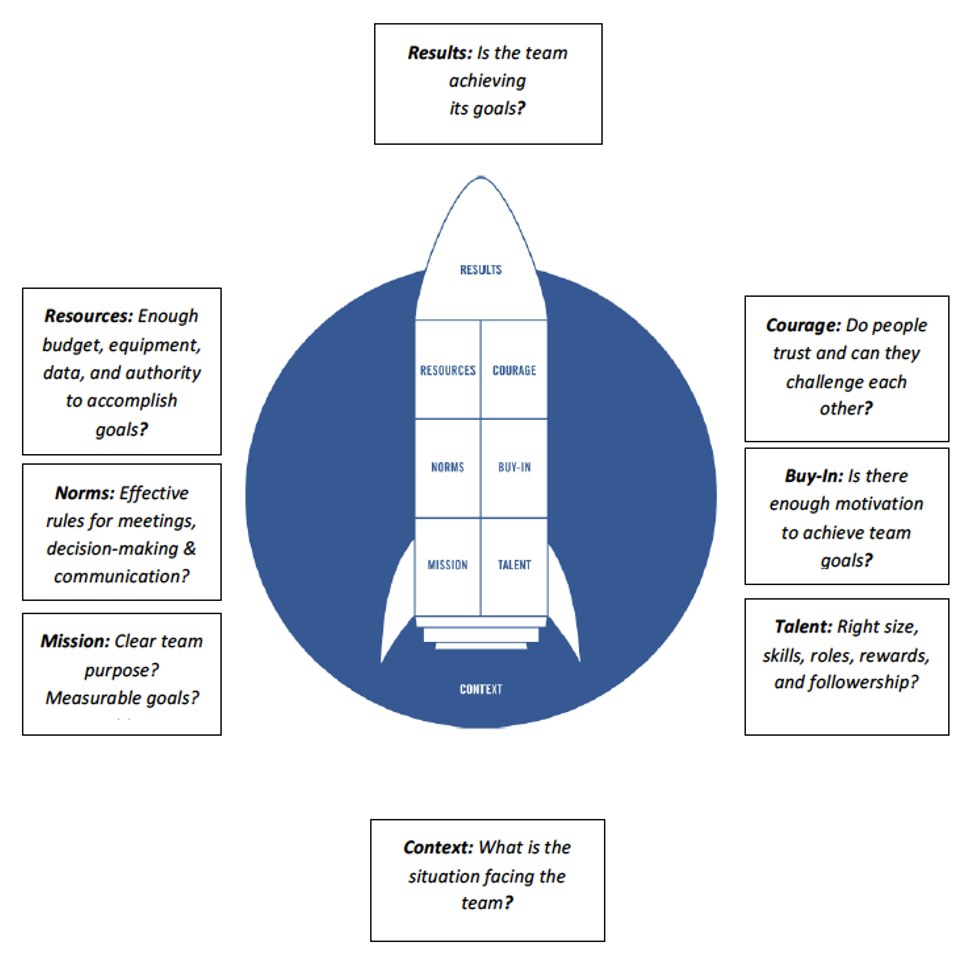
Take Gordon Curphy’s and Dianne Nilsen’s Rocket Model for example. This shows the interacting factors that need to be considered in developing and leading a team. We will highlight the Peter Hawkins 5-Disciplines model and the David Clutterbuck PERILL model in other posts. As with all models, they are not reality but they offer a great way into understanding the complexity involved.
No wonder that leading organisations are now rebalancing their investment from one-to-one coaching to team development.
(Source: PwC’ 2025 Coaching Industry Benchmark Study).
High-performing teams are built through honest reflection, tough conversations, collective leadership, and continuous learning—not a one-time personality profile, one-to-one coaching, or an internally facilitated workshop.