Category Archives: Blog

Slow down and wise up. 3 reasons why deceleration is key to smart leadership and how to do it.

Conventional business development is all around speeding up and going for growth. Anything less than bigger and faster is often seen as failure. Technology enables us to be connected to work and the world 24/7, the pace of life is unrelenting and making decisions at pace becomes the norm. Because that’s business, right?

But slowing down and taking stock can help your business stay relevant and reap great rewards.

By decelerating we mean creating the time and space for business leaders to stop and think. It is about time out of the business to work on the business. It is about getting heads out of the operational noise and thinking strategically. It’s about building resilience, reflecting and re-energising.

Smart leaders know that quality thinking is crucial, and while stepping off the operational hamster wheel might feel counterintuitive, the value of doing it is huge.

And if you feel you’re too busy and overstretched to contemplate pausing and lifting your gaze for even half a day, then perhaps you have stopped being a leader and are in perpetual operational management mode.

Think about that! A business with failing leadership…

Here are 3 reasons why deceleration makes great business sense.

#1   Living at speed is unsustainable

Busyness is seductive. But it isn’t really good business. Activity isn’t the same as achievement. And a continuous focus on operations, fighting fires, tackling problems, and never getting on top of things is a sure-fire energy sapping route to melt-down. It’s not clever and it’s not healthy for anyone.

Why is this good business sense?

You are going to kill or lose people. These are costly and avoidable business risks.

Slow down, wise up.

#2   Slowing down enables high quality strategic thinking

Deceleration isn’t about slowing down the delivery of business-as-usual, it is about creating a space where leaders can lift their gaze and start to explore the big possibilities that lie beyond immediate operational problems, and to shape the steps that will turn these into high value successes.

It’s about quality thinking: about direction and priorities; about building capability; about being resilient; and above all, about remaining relevant and in business This is absolutely key, and can’t be adequately explored while head-down, arse-up fighting operational fires.

Why is this good business sense? 

Better thinking, better conversations, better decisions, and better execution around bold strategic goals will accelerate achievement of success – however you define this for your business.

Put another way, crap thinking will lead to crap everything else you hold dear – revenue, profitability, cost avoidance, environmental impact, health, happiness etc..

#   3   It’s a powerful way to deal with the really hard soft team performance stuff!

Self-awareness, trust, fear and mindset are issues that many leaders and their teams wrestle with, and fail to front up to.  These are the building blocks of team and organisational performance.

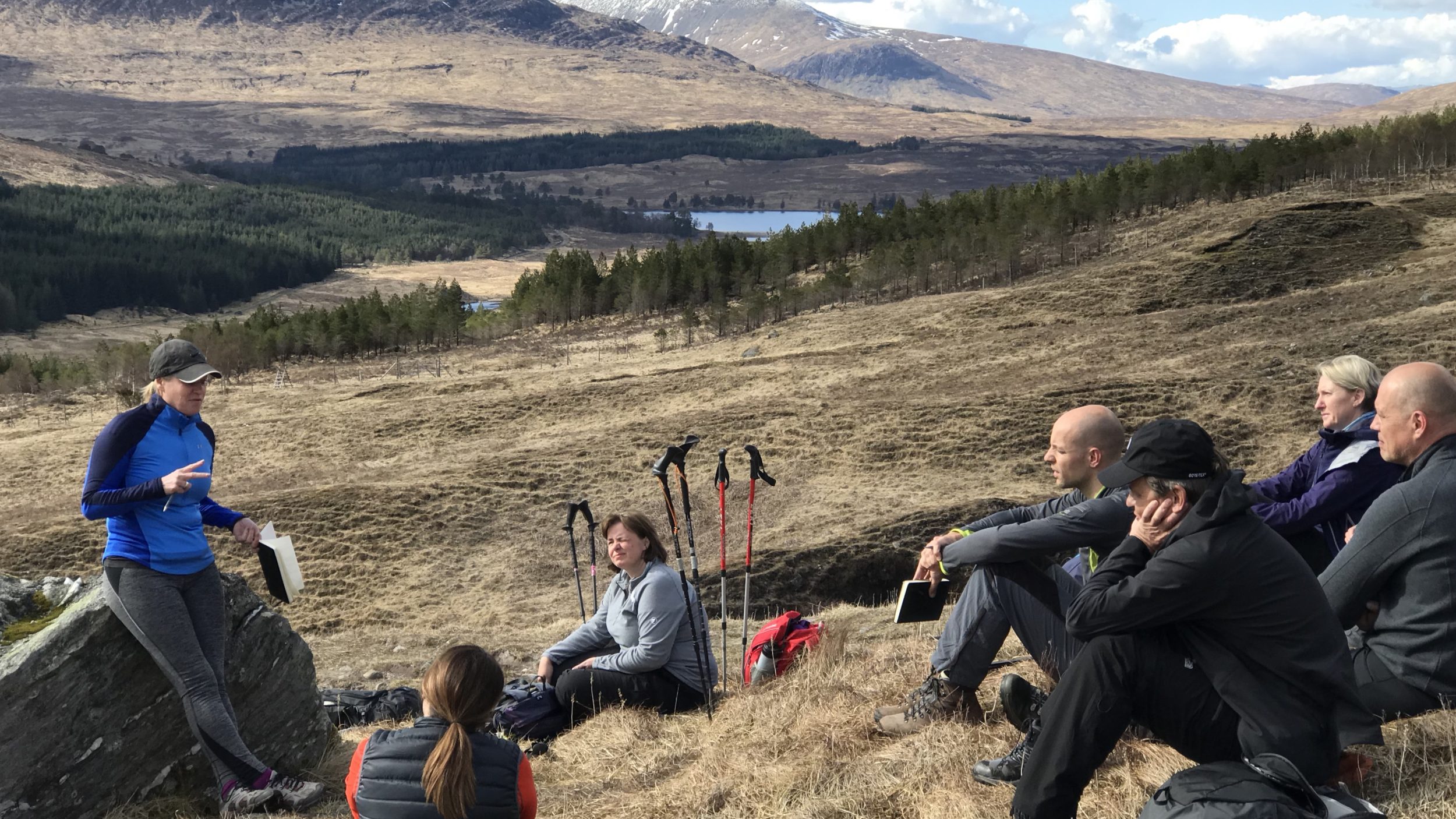
Slowing down and tackling these issues takes guts and a well thought out approach. An inspiring offsite space supported by experienced coach-facilitators will open up new levels of collaboration and clarity of purpose for you. Go for a walk, undertake a joint activity, strip away the work masks and connect.

Why is this good business sense?

When you get to know one another at a more human and honest level you’ll be amazed how trust and the quality of conversation blossoms. Ultimately the quality of collective decision-making improves.

Or you can continue to limp along as a dysfunctional operationally focused team that is too unaware or scared to make the investment in dealing with a wholly avoidable situation.

How to decelerate

None of this is rocket science. The difficult bit is actually following through on a decision to do it, and doing it on a drumbeat that matches your business cycle, or on an as required basis in between times.

  • Schedule your decelerator events. Be brave and take 3 days and 2 nights. Maybe once a quarter, whatever the right drumbeat is for your business.
  • Craft a programme around a theme, an inquiry, not an agenda. You want to encourage divergent thinking and creative conversations. That said, the back end of your time together could/should be more convergent around decisions and commitments to action.
  • Go offsite. Go somewhere inspiring. Not the same old hotel conference room.
  • Hire really good coach-facilitators. This is a key investment. They will challenge and support you as well as handle all the logistics and activities. They will co-design the event with you, and help you achieve your goals. They will give you the space to be fully present with your colleagues. And they will hold you to account in the weeks that follow your decelerator.
  • Do stuff together. Don’t sit on your backsides around a table. And don’t just get pissed at the bar. Mix it up. Do stuff together that brings you all alive and takes your heads, hearts, and souls to a bigger bolder place. You want everyone to bring their whole selves to this. Your coach-facilitators will give you some brilliant ideas.
  • Be inclusive. The last thing anyone needs is for a heroic sporting boss to impose his/her favourite challenge activity on a terrified, divided and disengaged team. Not smart.

Now that you are up for slowing down, have a look at one of our other blogs on how you might go about designing an offsite decelerator for your team:

We would love to support you in some way, so get in touch now by calling me on +44 7776 153428 or emailing me at dave@freshairleadership.com

Dave Stewart

Managing Director
The Fresh Air Leadership Company
Conventional business development is all around speeding up and going for growth. Anything less than bigger and …

Right now, your business isn’t going anywhere!

2019’s lessons in letting go to grow my business

Entrepreneurial Scotland had found me a business mentor, and he wasn’t pulling any punches.

“Dave. You are very creative, and you deliver amazing development experiences that really help leaders get clear about big challenges and what it is to lead.

But your business doesn’t really have a marketing and sales function. Right now, your business isn’t going anywhere.

Businesses have two parts. Finding the great customers you want to serve, and doing great work for them. Simplz!

You need a growth strategy and a marketing and sales engine to make this happen.”

And so started a process of my letting go in order to grow. Letting go of the idea that I could learn along the way rather than investing in expertise to build a proper engine for growth.

It has been about seeking the support of mentors and coaches. To tap into their objectivity, experience and wisdom, and to create focus and accountability.

Doing it all myself was about the fun of finding stuff out (a positive) but also about pride, a cost-mindset and wariness around cashflow. All a bit narrow and timid!

Could mindset be something that is holding your business back?

So what?

The obvious lesson in all of this is about understanding what you are great at and then finding really gifted people to cover the areas where you aren’t so strong. Obvious, but not if you are sleepwalking. It takes self-awareness, a readiness to be mentored and coached, and the faith to invest significant funds.

The choice is simply between bumbling along the runway or actually taking off!

So, what does the Fresh Air Leadership growth engine look like now? Here is a quick tour and a lot of loud shout-outs to some fabulous organisations and super-special individuals. Hopefully this will give you an idea of the skills sets you might need to consider as you develop your own business.

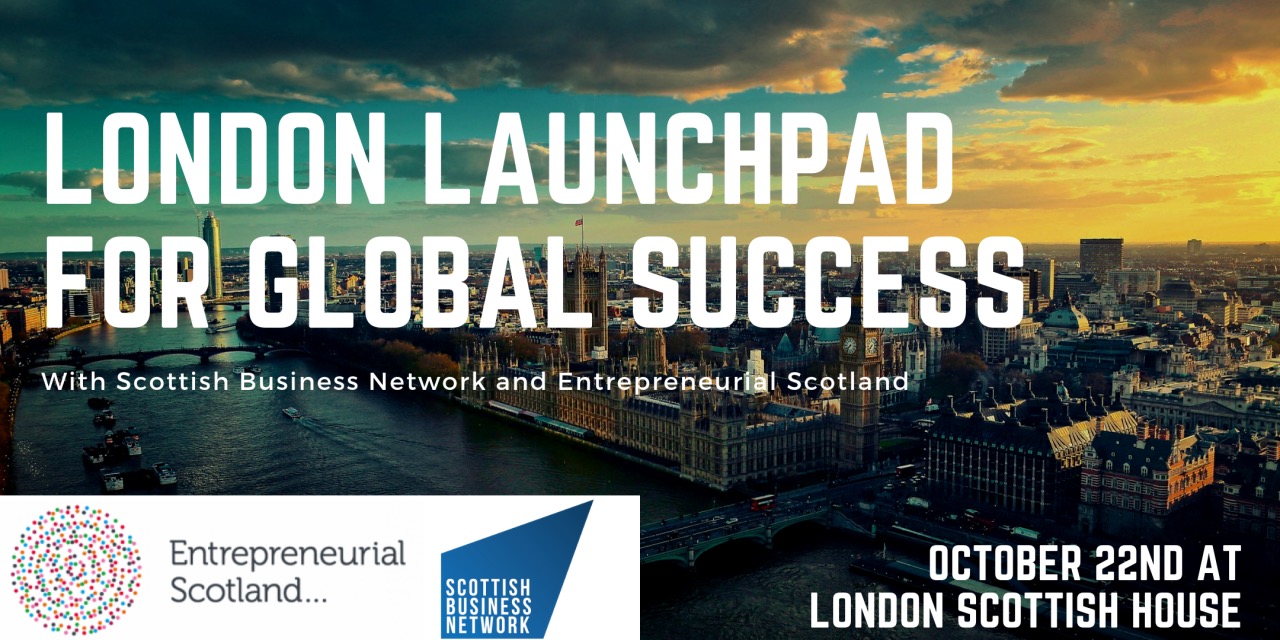
Firstly, I want to highlight two membership organisations in particular: Entrepreneurial Scotland and the global Scottish Business Network. What makes these stand out is the level of interest and active care they invest in members. They are driven by members’ success and they are dynamic and pushy in the best of ways. They work hard to understand your needs and then present the services that will support you – mentors, coaches, workshops, round tables, networking events, UK and overseas programmes, and targeted introductions etc.

They will do everything they can to create the conditions for your success. Membership isn’t a passive act and it’s a worthwhile investment. They make you work and hold you to account, both necessary to make things happen for you and your business. Big personal shout outs to Lisa Ferguson, Claire Johnston, Russel Dalgleish, Christine Esson and Kendra Byers.

Glasgow-based business mentor Les Meikle has helped me see the business from the outside and develop a growth strategy around a clearer value proposition. He is objective and doesn’t pull his punches. His challenges led to a major rebranding exercise which was expertly conducted with many of our clients and associates by Bristol-based content marketers Sonja Jefferson and Sharon Tanton.

All have worked as a team with Borders-based graphic and web designer Ali Montgomery. Bristol-based strategic storyteller and content marketing coach Sharon Tanton continues to help with developing our content and Bristol-based filmmaker Remco Merbis and Fife-based photographer Jay Golian have provided stunning film and stills imagery.

Bristol-based voice and impact coach Chris Grimes prepared me for my video voice-overs. Cumbernauld-based Juls Christie-Clark is about to start coaching our use of social media to boost our messaging and brand. And all of this is serving a powerful lead generation process developed with, and held accountable to, inspirational Glasgow-based mindset and sales coach James Fleming.

Now what?

There is a bigger story that wraps in our super-gifted associates, fabulous partners and wonderful clients. For now, this blog is about waking up, letting go, and investing in some serious expertise to build a fit for purpose growth engine.

Building this has brought home to me how much further and faster you can travel if you get the right help. I might have been able to figure out all the moving parts on my own, but it would have taken a fair while, not months to get really going. And without the support and accountability I may well have wandered off the path and lost focus.

A new decade is just around the corner. So what are YOU going to do about developing your business

Dave Stewart

Managing Director

The Fresh Air Leadership Company
dave@freshairleadership.com


2019’s lessons in letting go to grow my business Entrepreneurial Scotland had found me a business mentor, …

Mood, Mindset, and Money.

Three things for CEOs to consider before buying outdoor experiences

If you’re about to spend company money on leadership and team development, stop and read this first!

As a CEO,  you and your Learning & Development (L&D) colleagues are successful in growing organisational performance through developing employee capability. It’s up to your L&D team to source the right blend of e-learning, on the job training, external courses, coaching and more to get the people in your organisation performing at their best. When it comes to team and leadership development, you have a broad mix of options to choose from.

If you are researching outdoor programmes and experiences for your leaders and teams (see our Why Outdoors? Seven Great Reasons) you’ll want to know how these will move the performance dial for your organisation, and how to find the right provider to deliver it for you.

Here are three broad categories of outdoor programmes and experiences which may help you decide what you need. They are not so much discrete choices, but options which you might want to take elements of to help you develop the requirements for your programme.

Mood

Fun, fizz and reward

If you want to reward your people, then getting them off site and engaged in something fun and physical is a great option. You will want a provider that offers a clearly defined product, sometimes literally out of a box or off a shelf, and something they have turned the handle on lots of times before. They will have a virtual and hard copy catalogue of some sort.

You will be looking to pay an appropriately low to moderate price per head for this.

Photo: Dave Stewart

However, the bottom-line benefits of these kind of ‘fun & fizz’ days are often short term. When they work well, they lift people’s mood and can boost the feel-good factor in teams. There is a sense that ‘morale’ and ‘cohesion’ have improved. This can be an illusion. The afterglow will fade. Behaviours are unlikely to change. And performance improvements will be short term.

This category is a cost.

If not carefully scoped and communicated they can be divisive. And the more physical and demanding they are, the more you may inadvertently favour the ‘gladiators’ in the team and alienate the others. You may unwittingly deepen rifts and reinforce negative dynamics.

Wild. Very wild!

Teamwork, character, endurance

Expeditions have long been held as a means of developing “character” and aspects of teamwork.

These usually involve extended time away in testing and arduous environments, and the learning of skills from, and expedition leadership by, technical experts.

Think of Raleigh International and the Clipper Round the World Yacht Race.

Photo: Dave Stewart

“Vision quests”, an umbrella term for rites of passage and discovery of personal purpose, can also be included in this broad category. Vision quests – in the modern, western interpretation of the term – can also include therapy-based programmes.

This is a category that holds considerable physical and psychological risk and is potentially expensive in time and money.  Make sure your providers are appropriately qualified and experienced and have robust risk management arrangements in place.

Mindset

Self-awareness, trust, and team function

This category is specifically about individuals and teams; and you are interested in outcomes that improve business performance.

You are investing in deeper work which is potentially transformative in a whole range of ways. Not just individuals’ behaviours and “soft” (non-technical) skills, but subtle and not so subtle changes in organisational culture and performance. Depending on how you scope your requirement, this category will also promote awareness of and connection with the wider natural environment.

Photo: Dave Stewart

This will include, for example, high pay-off coaching and facilitation around self-awareness, trust, courage, mindset, collaboration and more. It can encompass retreats, treks, and simulations. It can also include workshops in outdoor settings – “walkshops.”

Your provider will not only keep you safe in the outdoors, and take you to inspirational places, they will have the skills and experience to co-design bespoke programmes and experiences. They will have the confidence to create the conditions for your people to explore and evolve with as little or as much coaching and facilitation as needed to achieve your goals. These skilled coach-facilitators will work dynamically in-the-moment with your people in the service of your desired outcomes.

You are looking for long term, high impact outcomes. This category is about business value rather than price. It is about investment rather than cost.

So, if this is an investment, how do you demonstrate return on investment (ROI)?

ROI

Clarity of objectives, evaluating outcomes

The Kirkpatrick Scale has been used in various forms since Donald Kirkpatrick first published it in 1959. Most recently updated in 2016 by his son James, the scale can be used as a framework to demonstrate the ROI that training delivers.

●      Level 1: Reaction The degree to which participants find the training engaging and relevant to their jobs

●      Level 2: Learning The degree to which participants acquire the intended knowledge, skills, confidence and commitment based on their participation in the training

●      Level 3: Behaviour The degree to which participants apply what they learned when they are back on the job

●      Level 4: Results The degree to which specified outcomes occur as a result of the training.

But be careful. With the emergence of informal and user-directed learning and development, and other influences on employee performance (e.g. leadership changes, new systems and processes), a clear mapping between a training event and performance outcomes – at Levels 3 and 4 in particular – may be very hard to make.

That said, participant and stakeholder narratives can be powerful and valid if collected as part of a well-directed inquiry process.

We make a point of discussing and agreeing with clients up front how evaluation will be conducted. Typically, evaluation will involve pre-event engagement with participants to explore, amongst other things, their specific needs. This ensures that a very high degree of relevance is designed into our programmes and experiences from the outset.

Post-event verbal debriefs and evaluation questionnaires (that reflect the specified objectives and outcomes) are combined to create a Level 1 understanding. Further engagement with client sponsors over the subsequent 3 – 9 months allow for the development of evaluation at Levels 2, 3, and 4.

What now?

Once you’re clear on why and how you’ll use an outdoor programme as part of your L&D mix, look for a provider that you can work with to co-design and deliver what you need.  (See our blog on Team Away-Days. Getting the Most for your Investment).

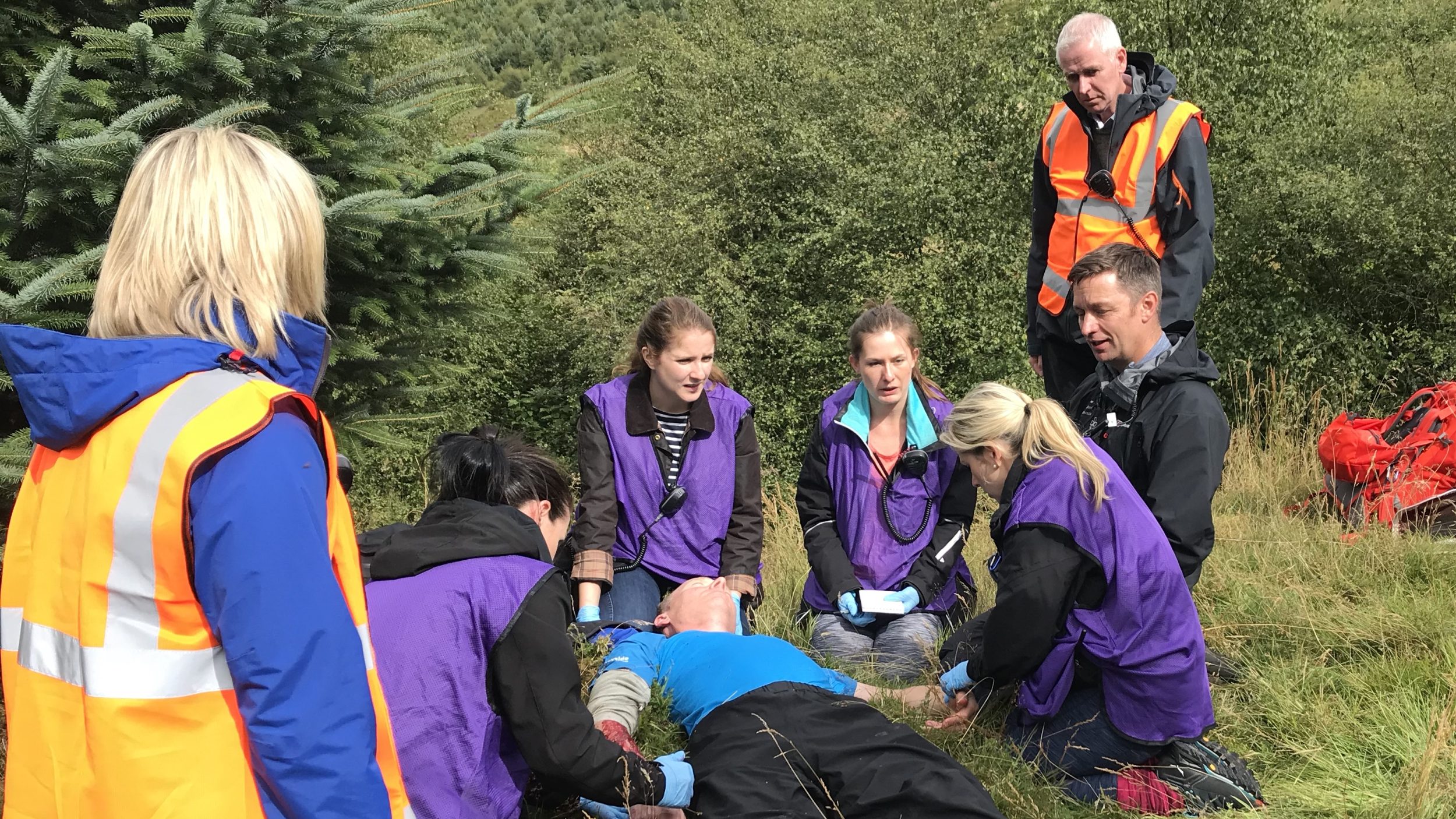
It may be that you need to develop a programme or simulation that brings together aspects of all 3 categories. For example, a simulation (such as one of our Mountain Rescue themed Team Missions) designed to deepen trust and creative challenge in a team ahead of major organisational scale-up can involve the fun and competition of search drone flying, as well as the stretch of trauma management and cliff rescue, whilst primarily focused on an inquiry into how the team needs to operate with courage, resilience, and common purpose.

Photo: Dave Stewart

For this, you’ll need an experienced and creative “Mindset” provider that really understands business, not a Mood booster or a Wild experiences expert. The provider will also need executive coach-facilitators with appropriate outdoor qualifications and arrangements with specialist partners where necessary to deliver a logistically seamless, safe, and high value business leader program.

A creative and experiential “Mindset” provider like The Fresh Air Leadership Company has the skills and experience to advise L&D professionals on how best to achieve their leadership and team development goals, and will work with you to shape a powerful programme that delivers what you need.

We believe the world needs better leaders. Contact me now to explore how we can help.

Dave Stewart

Managing Director

The Fresh Air Leadership Company
dave@freshairleadership.com

Three things for CEOs to consider before buying outdoor experiences If you’re about to spend company money …

Team away-days. Getting the most from your investment in time, money, and goodwill!

You love the idea of using the great outdoors to explore some of the team and leadership issues you’re facing. You feel it would be worthwhile to go offsite for a day, get people together to do some important thinking and planning, or just to get to know each other better. But making that happen is easier said than done.

Busy schedules and pressures from all areas of the business mean that getting everyone together won’t be easy. You’re already sold on the value that a change of scene and perspective, or an inspiring shared journey could bring to your organisation, but not everyone will see it like that. People will want to know what the return on investment will be for a day spent away from their desks, and you’ll need answers that they can get behind.

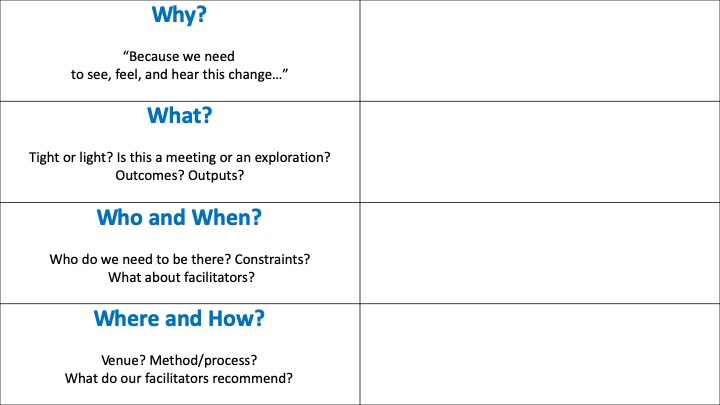
If you’re considering incorporating outdoor away days into your leadership and team development activities, a great framework to use is based on Kipling’s 6 Wise Questions: Why, What, Who, When, Where and How?

Here’s a planning sequence that will help get everyone on board, and some inspiration to help you picture the kind of outdoor experience that could work brilliantly for you and your team.

Why?

So, the first really important question is, “Why?” Why do you want to get the team away for a day? Where does this fit into your wider ambitions for the team? What’s the problem you’re trying to solve? What will be different when you succeed?

Sometimes there is a single tangible focus e.g. “we need to nail decisions and agree actions around our new structure”. At other times the challenge can seem more slippery. “The team just isn’t firing on all cylinders, motivation is patchy, some people just don’t get along and it’s affecting morale, and we’re going around in circles trying to make changes. We need to get out and get unstuck!”

Whether the issue is crystal clear or a bit muddy, you’ll need a simple statement of intent that everyone can buy into and which will guide planning for a successful day.

What?

Do you envisage your day as a tightly timetabled meeting or a more creative and less tightly structured exploration of a knotty issue? Maybe you just need space to let relationships breathe. Or a rewarding day of fun and inclusive activities?

Do you have an idea of what the tangible deliverables and less tangible outcomes from the day need to be? Your “Why?” will guide your answer.

For example, you might want to end the day with some clearly minuted actions; or you may just need to know that participants have spent undistracted time getting to know one another, and that levels of trust have improved. It’s a level of connection you will sense rather than measure objectively.

Who and When?

Who do you need to be part of the day? How will numbers affect dynamics, and what impact will this have on the depth and breadth of the discussions you need to have?

How will you communicate attendance? Are you planning other events that will bring in the wider group of stakeholders?

Are there other inclusivity factors that need to be taken into account? For example, are all participants able to take part in the planned activities, physically and diary-wise? And will participants who are parents be expected to make different arrangements for the school run?

Who will help you run the day? It’s a great idea to hire an external facilitator. Having a specialist team plan and run the day will allow you to be fully engaged with colleagues rather than worrying about managing a process and a whole load of behind-the-scenes logistics.

An outdoor-based away day will demand skills and qualifications that may not readily be available internally. This takes us to “Where” and “How”.

Where and How?

Place and process have a massive impact on the way people think and act.  Discuss your answers to the previous questions with your facilitation team and let them propose the “Where” and “How” to best meet your needs. They will have some great ideas.

The outdoors for example is a naturally fabulous creative thinking environment.  Add expert facilitation and your away day is likely to be a super-powerful experience.

Check out this 60 second video and this download if you need additional material to share with colleagues to excite them about the power of the outdoors!

We have run lots of offsite events. These have included walking workshops to explore skills such as presence & impact and topical issues such as climate change; strategy retreats blending indoor and outdoor work; multi-day leadership treks to clarify, prioritise and plan personal development programmes; and complex simulations involving mountain rescue teams and other specialist providers.

Ideas to inspire your purposeful away day

Here are some quick ideas to get you thinking about the kind of experience that could work well for you:

If you’re looking to get the whole team behind a shared goal and to collectively design the journey then a walking workshop using a local area of outstanding beauty can be inspirational. Build in a pub lunch half-way round to create “table energy” and you have the best of indoor and outdoor environments.

If you want to get the senior leadership team offsite to explore and evolve key strategies then exploring a landscape that gives you big vistas and inspires creativity can help people think and feel way bigger. The Scottish Highlands are ideal for inspiring ‘top of the world’ thinking, and can be combined with the luxury of castles, Highland lodges, and inspirationally sited hotels if your purpose is to reward the team too.

If you want to embed a new mission based way of working, a crucible experience like the one we designed for a bank could help. We worked with a mountain rescue team and a film producer to help the bank’s executive team explore different leadership strategies, team working, and real-life priorities. This was a highly visceral experience which participants continue to reference, and which anchored their insights far more than any desk-based ‘lunch and learn’ session ever could.

If you’re looking to get the team to trust each other then an away day that weaves disclosure and other exercises into the itinerary can be powerful. Have a look at our blog here for one such exercise you can experiment with right now!

Fresh Air Leadership Away Day Planning Tool

This template will help you plan a really effective outdoor experience. And it will help you engage with your facilitation team. They will love you for it!

What now?

If you have found this useful and want to know more about running great outdoor leadership experiences, we will be very happy to advise. Just pick up the phone and call me on +44 7776 153428 or email direct at dave@freshairleadership.com

Dave Stewart

Managing Director

The Fresh Air Leadership Company
You love the idea of using the great outdoors to explore some of the team and leadership …

Leadership banana skins – seven tips to avoid a trip

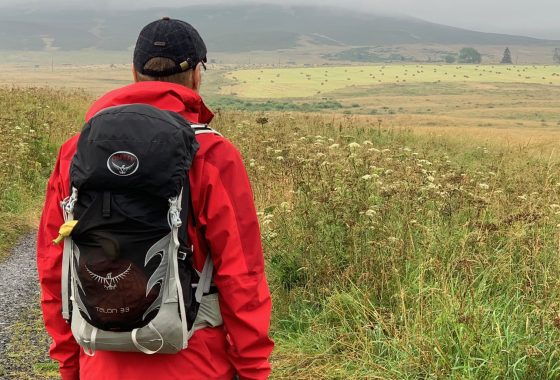
There’s a story behind this image. I almost rejected it from a photo shoot for the new website as it wasn’t perfect.

Do you see the banana skin hanging out of the rucksack side-pocket? I was worried it made me look unprofessional.

But isn’t that banana skin a slippy little reminder of all of our imperfections as leaders?

Don’t we all carry around something that could trip us up?

Whether it’s a belief, a pattern of behaviour, or some unhelpful blind spot, we’re all capable of falling flat on our faces when we let our weaknesses rather than our strengths take the reins.

What’s your banana skin?

Perhaps it’s dealing with confrontation, managing meetings or public speaking.

It could be a worry that you’re not cut out for leadership, or a concern that key people in your team are not fully committed and failing to pull their weight.

Maybe you have a whole bunch of them!

So what?

Effective leaders know how to manage their banana skins so they can lead with their strengths.

This level of self-awareness and management is the basis of emotional Intelligence.

Emotional intelligence is the ability to recognise your emotions, understand what they’re telling you, and realise how your emotions affect people around you. It also involves your perception of others: when you understand how they feel, you can manage relationships more effectively.

High levels of emotional intelligence make leaders more effective. Decision making, coping with stress, staying calm under pressure, getting the best out of other people, and motivating others are all more manageable when you recognise your own patterns of behaviour, and can understand how others are feeling and reacting too.

Heightening your levels of emotional intelligence starts with yourself. How do you react when things aren’t going your way? How does it feel when you’re faced with someone who doesn’t listen? And on the positive side, how are you behaving when everything’s going swimmingly? How do you act when you’re on top of your game?

Recognising your slippy banana skins is the first step to minimising them. Here’s how to find yours and keep them in check.

Now what?

So how do you keep your banana skins from causing leadership trips and slips?

Here is my list. Let me know any others you use.

#1  Be reflective. What are you noticing in yourself, and in the reactions of others? What is it that makes you interpret these reactions in the way that you do? Could there be other interpretations?

#2  Be open to feedback.Actively seek it. (Without becoming an overly self-indulgent pain in the butt, of course.)

#3  Find your critical friends.Have some trusted buddies who will tell you as it is.

#4  Keep a journal.Jot down your reflections and any feedback you have had from others. Write on the left-hand page. Review over time for any patterns. Jot these down on the right-hand page.

#5  Say it out loud to your face. Make a video diary of your reflections. Use the same principle as a written journal.

#6  Group learning. Experiment with collective feedback sessions. After routine meetings, for example, close with a round of, “What I found really great/valuable/etc about this meeting was ABC. What I noticed got in the way/closed me down a bit was XYZ.”

#7  Remember why you’re a leader! You are in a leadership role because you are exceptional in one or more ways. Don’t lose sight of this. For sure, pay attention to those banana skins that will seriously derail you, but do keep honing the skills that make you great. Pack the other banana skins away in your rucksack.

Start now

Self-reflection is important, so get on and do it! And make it one of your leadership habits.

I have offered 7 tips above. No excuses. Commit now to one or more.

Let me know how you get on and please share any other tips.

Dave Stewart

There’s a story behind this image. I almost rejected it from a photo shoot for the new …

Go get some awe!

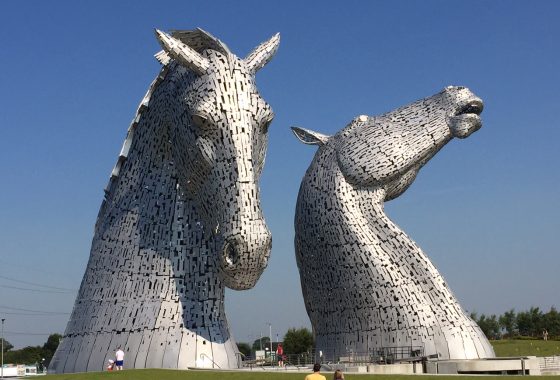
I am in Falkirk, Scotland today. Being a tourist, and visiting the “Kelpies“.

“Kelpies” are mythical creatures, shape-shifters, living in water, and often taking the form of horses. And here they are given huge, 30 metre-high, metallic form by Scottish sculpturist Andy Scott.

I find myself staring at them.  A full, timeless hour.

In total awe.

The form, the detail, the metal-work, the underlying structures, their sheer size. The changing colours and reflections. The sense of living personality. Their artistic representation of the industrial revolution, progress, cutting edge technology, and guardianship of Scotland’s equine heritage and inland waterways. The passion of the sculpturist that created them. And lots more.

And just a hundred meters away, a group of happy, squealing children are being led through the woods and wetlands on a “Fairies, Elves, and Woodland Friends” walk.

More awe.

Today helped me realise I am in the business of awe.

And that perhaps we all should be?

We help senior teams and leaders tap into the extraordinary. They are for the most part tired, anxious, and scared. They seek new levels of trust, the courage to engage closely, excitement and inspiration, and the guts to execute bold, elegant moves.

When were you last in awe?

When did you last spend timeliness moments lost in awe? How can you make this part of what makes you and those around you brilliant at what you do?

Go get some awe!

Dave Stewart

Managing Director, The Fresh Air Learning Company

Extraordinary Team Experiences | Inspirational Leadership Journeys

P.S. Our next engagement with awe has 3 places left. Highland Hack, a 4 night/3 day walking journey for senior leaders through the Scottish Highlands gathers evening 12 Sep and disperses breakfast 16 Sep 16. Find out more here.

I am in Falkirk, Scotland today. Being a tourist, and visiting the “Kelpies“. “Kelpies” are mythical creatures, …

Gravity, flat-landers, and flat-lining

Do you recognise this start to your day?

“I put on my work clothes. Pressed. No creases. I slip my smooth flat laptop into its flat case, and into my flat shoulder bag. I head for the station. The flat ticket comes out of the flat fronted machine when I put my flat credit card in and punch the purchase code into the flat keyboard. I sit on a flat seat, or maybe stand on the flat floor of the carriage hurtling along the flat, straight rails. I read the news headlines and emails from the glowing flat screen of my smart phone. I look up and see a two-dimensional countryside whizz past through the flat toughened glass windows. Arriving at work, my flat magnetic pass gets me in. I print off a flat agenda and other flat papers and head along the flat corridor to the meeting room. Its made from flat metal and glass. I sit on another flat seat, and place my flat papers on the smooth flat conference table. Others arrive with their flat papers. The meeting starts. The conversation we then have is ….”

Sure, there are lots of great reasons to live and work like this.

But tell me this…

How do you escape the gravitational pull of the flat-lands?

Where do you go to discover mind-shifting perspectives? To do some seriously great thinking? To have truly awesome conversations with the people you need to connect courageously and creatively with? To find and share real passion and energy? To align behind the bold moves you need to make?

Are you flat-lining as a leader, as a team, as a business?

What is the worst that could happen if you were to blast out of your flat-lining flat-lander’s existence for a few days, and do something vibrant and inspiringly different?

We can help of course. And here is one exceptional journey that has worked brilliantly for gravity-defying former-flatlanders.

Your courage. Our creativity. Your call. Let’ go.

Do you recognise this start to your day? “I put on my work clothes. Pressed. No creases. …

Naturally crazy. Give it a go!

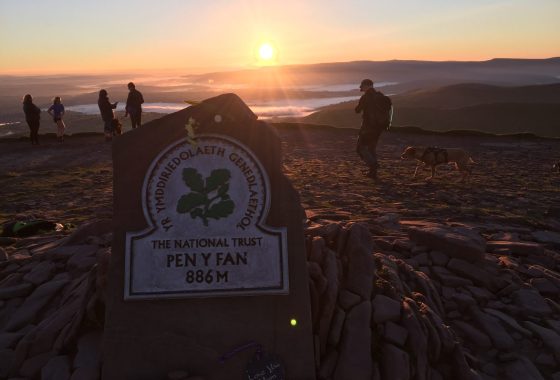
We took a business team up Pen y Fan, Southern UK’s highest top, two nights ago. A perfect full moon followed by a perfect sunrise. An inspiring experience in its own right.

During the ascent, friend and Fresh Air Learning Company associate, Jo Bradshaw recounted her experience of summit night on Mount Everest exactly 2 months previously.

A combination of terrain (one tenth scale of Everest, and topographic features she could link to the South Col, Hilary Step, South Summit, and summit etc.), iPad slides – brilliantly colourful in the dark, and the physical exertion of participants themselves, made the experience an Everest talk with a difference.

For our clients, the walk was primarily about achieving something out of the ordinary together. And they did. A grounding and connecting experience. A meaning-full reference point for future conversations.

The Everest story, and Jo herself, provided an interactive layer of metaphors around goals, resilience and teamwork to the whole experience.

So what?

The team was extraordinary in a number of respects.

Not all were outdoor people, only two described themselves as hillwalkers, there was a wide range of fitness levels, no-one had walked up a mountain in the dark before, and no-one had witnessed the magic of a mountain sunrise in their three or four decades.

And yet there was a willingness to give this crazy idea a go. Remember there was no expectation that the weather would be so incredible when they booked this Fresh Air Business Walk several weeks previously.

There was a sense that their personal and working relationships would be enriched by doing something different together; something connected with the outdoors and naturally inspiring; and through Jo’s Everest story, humanly inspiring.

Now what?

When you consider the needs of your team, where are you all on the spectrum of mundane to way-beyond-ordinary when it comes to creating the sorts of relationships that make great performance possible?

And you know that if you always do what you have always done, you’ll always get what you have always got.

Your courage. Our creativity. Your call. What might be possible?


We took a business team up Pen y Fan, Southern UK’s highest top, two nights ago. A …

A return to Nature

(This is a guest blog by a good friend of ours – Andy Milward of Milward: Consulting & Research in Strategic Leadership

We are in the constant grip of unhealthy imperatives

Our quality of life is under assault. Employers exhort us to ‘drive’, to ‘compete’, to ‘deliver’, to be ‘crisp’. They expect us to act not reflect.

The virtual world has increased social distance and reduced personal intimacy. Face to face contact is the exception not the rule. Relationships have become shallow and transient. Trust is rare and suspicion is rife.

The pursuit of self-interest transcends the pursuit of the common good. We behave with reckless abandon, regardless of the damage we cause to others.

Aspirational advertising induces us to strive for things we can rarely attain, and certainly do not need.

We must always look good and never show weakness. If we fall short of the standards expected of us we have failed, not tried.

Life has become a debilitating competition

Perpetual media envelops us in misery with its selective reproduction of bad news and gloomy prognoses.

Press intrusion is making our private lives public.  Governmental intrusion is eroding our liberties.

We face a crisis in health

There is an epidemic of obesity, diabetes, and heart disease. Young women unable to attain that perfect airbrushed body are afflicted with life-threatening disorders, such as anorexia and bulimia.

Substance abuse is ubiquitous.

The World Health Organisation forecasts that depressive illness is expected to constitute the second largest cause of disease burden in the world by 2020[1]

We are living in a permanent state of existential angst

But we were not intended to live this way. In our efforts to exploit the opportunities the world offers, we have lost sight of what really matters in life. The human and environmental cost is a devastating indictment of our behaviour. We are the architects of our own demise.

However, there is a simple thing we can all do to improve our own and others’ wellbeing.

It does not require decades of pharmaceutical research. It does not need a massive investment of taxpayers’ money. It does not require a revolution in ideology. The solution is all around us. We encounter it every day, but sadly we do not recognise it.

The solution is a return to nature

A return to nature is a retreat from the bruising turbulence of life. There is a great stillness in nature that restores our sense of presence and place.

As the ancients have taught us, meditation, yoga, and similar practices help us to control our attention, and deflect unwelcome thoughts.

A return to nature has the same effect. It is the most natural therapy.

It helps us learn to live in the present moment, not the guilty past, or in an anxious future.

We can learn to see, smell, feel, and hear again

Who is not moved by an early morning mist shrouding the landscape, rays of sunlight piercing a forest canopy, or the fragrance of flowers wafted on a balmy breeze.

Contemplate the serenity of a sunset, the magnificence of ice-capped mountains, or the eternal swell of the ocean.

Nature heals us with its music. The dawn chorus, the splatter of rain on a muddy path, the crunch of freshly fallen snow underfoot. The rustling of leaves in the trees, the crash of waves on the shore, the anguished howl of a gale.

We should learn from the animal world. Watch your pet dog or cat basking in the sun. They do not ruminate about the past, or worry about the future. They live in the present. Their sheer joy emanates from simply being in the world.

The majesty of nature disposes us to curb our self-conceit. It reminds us we are each but a minute part of a vast, mysterious universe. Although we each have a valuable role to play, no one of us is more important than any other.

Nature has the potential to re-humanise our participation in the social world

Our detachment from nature has impoverished our social conscience. By reconnecting with nature we can recover the cardinal virtues we have long abandoned.

Employers, teachers, politicians, anyone able to influence the thoughts, feelings, and behaviour of others, has a responsibility to reconnect with nature. Nature cleanses the mind, elevates the spirit, but above all, it inspires moral action.

A return to nature should be a compulsory element in everyone’s personal development. Unfortunately, it does not feature largely in our educational curriculum. Policy makers take note.

Andy Milward

Milward: Consulting & Research in Strategic Leadership

[1] WHO. (2008). “What is Depression?”   Retrieved 10 July 2016, from http://www.who.int/mental_health/management/depression/definition/en/.


(This is a guest blog by a good friend of ours – Andy Milward of Milward: Consulting & Research …

The CEO burst into tears

Dear CEO,

A friend of mine once asked a CEO colleague when he, the CEO, had last heard bird song.

The CEO burst into tears.

He had been living a life in offices, taxis, trains and planes. Incessantly.

What are you hearing just now?

Intermittent high pitched screeching? The threatening bass riff from Jaws? Maybe an uplifting orchestral film score? Or something distractingly discordant?

Who is the conductor in all of this? Maybe its a happily creative jam session. Or a disorganised cacophony on a loop?

And what of the whispers?

And the lows and highs on the edge of hearing?

How do you attend to those? And what sense are you making of these? Great ideas in the making? Or the fin of an inbound shark?

Back to the tearful CEO.

There’s something right there about being disconnected from something important. Something we are missing in our flat worlds of screens, spreadsheets, tables, flip-charts,  floors, roads and runways. Something that refreshes, inspires, and energises. And a whole lot more.

Dear CEO,  when did you last hear bird song. And savour it? Deeply?

Dave Stewart

Managing Director

The Fresh Air Learning Company

Dear CEO, A friend of mine once asked a CEO colleague when he, the CEO, had last …